How Mathchops and Grammarchops are designed to raise your SAT and ACT scores

How Mathchops and Grammarchops are designed to raise your SAT and ACT scores

Classes From the Author News Tests

[Today we’re delighted to repost a blog from Mathchop’s Substack written by Mike McGibbon that explains WHY Mathchops and Grammarchops are so good at raising Woodlands Test Prep students’ scores.  Every student with Woodlands Test Prep gets access to Mathchops and Grammarchops because we know that, in conjunction with excellent tutoring, excellent practice resources are crucial.  Take it away Mike!]

Here are 10 theories that have been really helpful in building Mathchops and working with students.

I will start with the Zone of Proximal Development (ZPD), which I think of as “finding tasks that are at the level of the student.” Students learn faster when things are at the right level, and they enjoy it more, which helps them practice more, which helps them learn more. Think of a 6-year-old trying to learn how to shoot a basketball. A pro-sized basketball and 10-foot hoop won’t be productive – it will be too hard for the kid to make a shot. But with a smaller ball and shorter hoop, you can introduce basic shot mechanics, then work towards NBA conditions over time. The same is true of math – questions are king. But finding the right questions is not easy. And that’s where Item Response Theory has been particularly helpful. I wrote a lot more about it here, but the idea is that you can design systems that rate both the questions and the students. If a question has been answered thousands of times by students with known ability rankings, you can get a very good idea of how difficult that question is. And if you have a pool of questions that are rated very precisely, you can use those ratings to estimate the abilities of students very precisely as well. Precise question rankings have allowed us to make accurate score predictions in Mathchops, which make the games much better for students.

Unfortunately, finding the right questions doesn’t matter if the students don’t learn how to answer them correctly. And that’s where learning a little cognitive science has been helpful. All of the terms I’m about to mention fit nicely into one model of how people learn, although I’m not aware of one universally-accepted name for the model.

At its center is the concept of working memory. It’s a sort of mental scratch pad with very limited capacity – there’s not much space on the pad, and anything you ‘write’ (think of, focus on) disappears after several seconds. If I ask you to remember the digits 2, 7, and 4, you probably won’t have any difficulty. But if I start to rattle off 50 digits, you probably won’t remember them all.

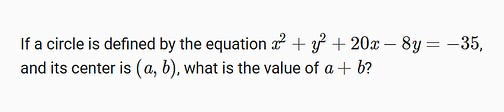
It is thought that we can only process a very limited number (maybe 4 or so) chunks of information at a time. But these chunks can take many, many different forms. They can be dance steps, melodies, speeches, parallel parking skills, smells…really anything at all that you can think of. And if you make sophisticated chunks, then you can do a lot more with your working memory. For example, if you’re just learning to sing Happy Birthday, you may have trouble focusing on anything else. But if you’ve sung it for 40+ years and are attending a 5 year-old’s birthday party, you can quite easily sing it and simultaneously think about whether it would be rude to check your fantasy football stats (this is completely hypothetical). That’s because the whole song is now one extremely efficient chunk – it can exist on the scratch pad while leaving lots of room for other chunks. Developing automaticity in this way allows you to work on more complex tasks. For example, a well-prepared SAT student can see the following question and draw upon chunks like completing the square, the Pythagorean Theorem, and graph translations.

But how do you create sophisticated, flexible chunks? How do you develop automaticity? Many of the best techniques are related to the concept of desirable difficulty, which refers to tasks that are irritating to the student in the moment but very helpful in the long term (and not so difficult that they are impossible to complete). You want something highly relevant and very difficult…but still doable.

One of my favorites is retrieval. The very act of attempting to recall something will help you remember it better, and the more difficult it is to recall it, the better you will remember it. For example, if I tell a student the definition of ambivalent and then ask her what the definition is two seconds later, she’ll probably remember (if she was listening!). If I ask again and again – five times in the span of one minute – I’ll probably get fired, but she will easily recall the definition. 

But that’s not particularly useful. It would be much better to ask her a minute later, then ten minutes later, then later in the day, then the following day, then a few days later, etc. This spaced repetition will force the student to work a little harder to remember the definition, but she’ll ultimately remember the definition for much longer. If she also interleaves this practice with other work, working on tasks ABCDABCDABCD instead of AAABBBCCCDDD, she’ll learn all of these tasks much more quickly and durably.

Another term, borrowed from Ericsson’s studies of highly skilled performers, is deliberate practice. It’s the idea that you should actively seek out your weaknesses, analyze them, then practice repeatedly. This is probably the term that best captures what Mathchops is trying to do (it’s essentially a ‘deliberate practice’ app). 

All of these concepts have deeply affected the design of Mathchops. For example, we don’t offer multiple choice math answers – you have to work hard to retrieve the answer (or the skills you need to solve the answer). Every score-related game is timed to encourage automaticity. Students never practice the same question multiple times in a row – spaced repetition and interleaving are baked into every game students play. And when a question does repeat, the numbers are different. Mathchops also provides immediate feedback after every retrieval attempt in the form of brief explanations, so that students understand (and don’t repeat) errors.

Further Reading:

Your Memory: A User’s Guide, by Alan Baddeley

The Rating of Chess Players, Past and Present, by Arpad Elo

Perception in Chess (about chunks and working memory)

Make It Stick: The Science of Successful Learning, by Peter Brown

The Role of Deliberate Practice in the Acquisition of Expert Performance(Ericsson, Krampe, Tesche-Romer)

Peak: Secrets From the New Science of Expertise, by Anders Ericsson and Robert Pool

Measuring Up: What Educational Testing Really Tells Us, by Daniel Koretz

The Math Academy Way, by Justin Skycak (useful overview of lots of theories)

Great News for Families: 529 Plans Now Cover Tutoring and Test Prep!

Great News for Families: 529 Plans Now Cover Tutoring and Test Prep!

From the Author News

We’re excited to share an important update that can make a real difference for families planning their educational journeys. With the newly signed “One Big Beautiful Bill Act,” 529 college savings plans now offer expanded benefits—including coverage for tutoring and test preparation services!

What’s Changed?

As of July 4, 2025, families can use their 529 plan funds tax-free for a wider range of K-12 educational expenses, such as:

  • Tutoring services (not just tuition)
  • Standardized test fees (SAT, ACT, AP exams)
  • Test prep classes and materials
  • Curriculum materials, books, and online educational resources
  • Educational therapies for students with disabilities

And there’s more good news: you can withdraw up to $20,000 per year for these expanded K-12 expenses!

When Can You Start?

These new benefits are available for distributions made after July 4, 2025, so you can use your 529 funds for tutoring and test prep starting with the 2025–2026 school year.

Expense TypeCovered Under New Law?Effective Date
K-12 TuitionYesAlready allowed
Tutoring (K-12)YesJuly 4, 2025 onward
Test Prep (SAT, ACT)YesJuly 4, 2025 onward
Homeschool MaterialsYesJuly 4, 2025 onward
Educational TherapiesYesJuly 4, 2025 onward

Please check with your accountant for advice on how these changes affect you personally. Also, check your state’s 529 plan administrator, as some states may need to update their rules to match the new federal law.

Helpful Tips

  • Check State Rules: While the federal law is now in effect, some states may take a little time to update their own regulations.
  • Save Your Receipts: Keep documentation for all tutoring and test prep expenses paid with 529 funds in case you need them for tax or state purposes.

We’re Here to Help!

If you have questions about how these changes can benefit your family, or if you’re ready to use your 529 funds for test prep, reach out to Woodlands Test Prep. We’re committed to helping students achieve their educational goals—and now, your 529 plan can help too!

Let’s make the most of these new opportunities together!

Can We Fix It? Yes We Can!

Can We Fix It? Yes We Can!

Daily Notes From the Author Inspiration Tests Uncategorized

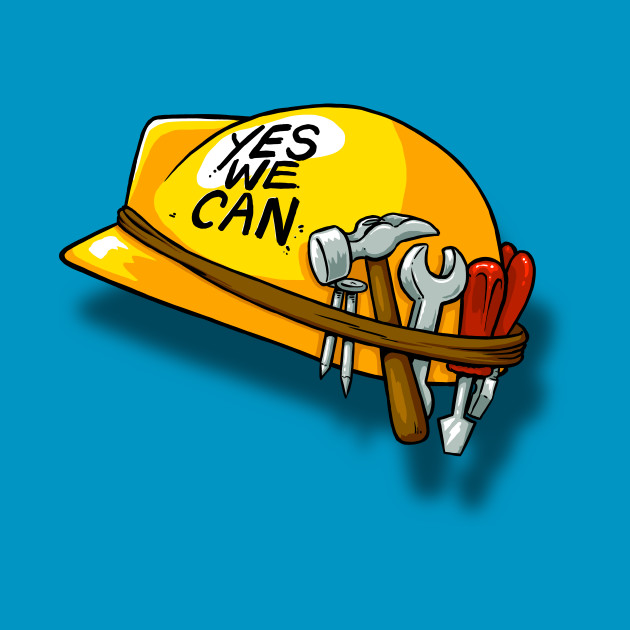
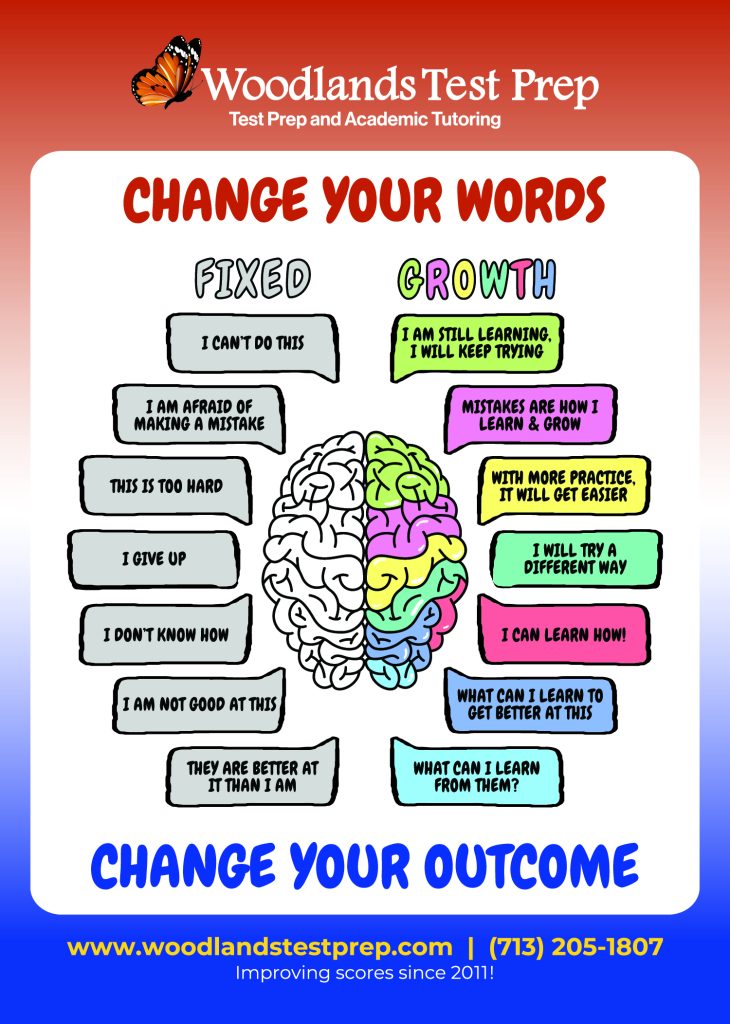
Remember Bob the Builder saying “Yes we can?” Well it’s true! By changing the way we think about challenges, we can change the outcomes we create! This way of thinking is called a “growth mindset.” Adopting a growth mindset can be a game-changer for test prep … and for life. Instead of seeing abilities as fixed, a growth mindset encourages you to believe that intelligence and skills are developed with effort, practice, and perseverance. This simple shift in thinking transforms challenges from intimidating obstacles into exciting opportunities to learn and improve.

When preparing for the SAT or ACT, it’s easy to fall into the trap of negative self-talk: “I can’t do this,” or “This is too hard.” But changing your words can change your outcome. Replace “I can’t do this” with “I am still learning. I will keep trying.” Instead of fearing mistakes, remind yourself: “Mistakes are how I learn and grow.” This approach not only boosts your confidence but also helps you bounce back from setbacks, making studying less stressful and more effective.

As Graham Weaver explains, when we’re ready to learn something new or make a positive change in our life (or improve our SAT or ACT score), we’re almost always going to be worse first. We’re changing and we still need to practice! Continuing on through that dip into the giant gains that follow is the key to improving!

A growth mindset doesn’t just help you academically –it builds resilience, grit, and a lifelong love of learning. Students who embrace this mindset are better equipped to handle transitions, develop new skills, and even experience greater happiness and self-esteem. They see others’ success as inspiration, not competition, and are more likely to seek feedback and use it to improve.

Ultimately, test prep is about more than learning “tips and tricks.” It’s about believing in your ability to grow. With a growth mindset, every challenge is a stepping stone toward success-not just on test day, but in every aspect of your life.

Empowering Educators: Insights and Innovations from the NTPA Winter Workshop

Empowering Educators: Insights and Innovations from the NTPA Winter Workshop

From the Author News SAT vs. ACT Tests

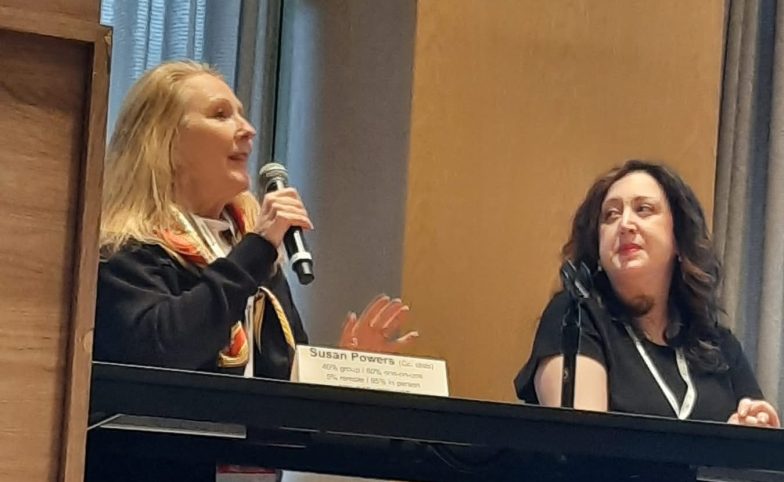
Susan Powers, founder and CEO of Woodlands Test Prep, recently participated in the National Test Prep Association (NTPA) Winter Workshop held in Nashville, Tennessee, on December 16 and 17, 2024. As a member of NTPA’s Board of Directors, Susan plays a pivotal role in the organization by leading and contributing to the test prep community.

Attendees at the 2024 NTPA Winter Workshop in Nashville, Tennessee

The NTPA is a professional association dedicated to supporting test prep professionals, upholding the highest ethical standards, and promoting best practices in the test prep industry. Its mission focuses on fostering collaboration among test prep providers and sharing best practices to enhance the quality and effectiveness of test preparation services.

At the Winter Workshop, Susan led a panel titled “Goal 1600: Strategies for High-Scoring SAT Students,” where she shared her extensive experience in guiding students to achieve top SAT scores. Other panel members were Brooke Hanson of Supertutor TV, Kate Fisher of Kate Fisher Tutoring, and Leia LeMaster Horton of Horton Test Prep. The panel delved into advanced techniques and personalized approaches tailored for students aiming for a perfect score, providing valuable insights and resources for educators.

In addition to leading the “Goal 1600” panel, Susan served as a panelist in the “Efficiency Hacks” session. This discussion focused on optimizing study methods, time management, and resource utilization to enhance both teaching efficacy and business performance. Susan’s contributions highlighted practical strategies to streamline back office processes, benefiting educators seeking to have more time to hone their instructional methods.

Susan’s involvement in these panels underscores her commitment to advancing the field of test preparation and her dedication to supporting students in achieving their academic goals. Her leadership within the NTPA and her active participation in events like the Winter Workshop reflect her passion for education and her drive to promote excellence in standardized test preparation.

For more information about Susan Powers and Woodlands Test Prep, visit woodlandstestprep.com. To learn more about the National Test Prep Association and its mission, visit nationaltestprep.org.

Preview where you’ll be accepted in Texas!

Preview where you’ll be accepted in Texas!

From the Author News

Simplify College Applications with My Texas Future’s Direct Admissions

Texas students can now see which of the state’s public universities would accept them before submitting college applications. Wow!

My Texas Future’s Direct Admissions program is opening doors to higher education for Texas students. This innovative program offers eligible middle and high school students direct college admission based on their academic performance, and, while no test scores are required to participate, students with solid SAT or ACT scores can enhance their applications and expand their options at participating colleges.

This program is ideal for students seeking a stress-free, straightforward pathway to college. First-generation college students and those from underserved communities especially benefit, as it removes traditional barriers like application complexity.

Whether you’re a high-achieving student or simply exploring your options, this streamlined process helps you get a step closer to your college goals.

Visit the My Texas Future website to learn how to leverage this program for your college journey!

Load more

No more posts to load.

Load more

No more posts to load.